
Medidata Platform
Aligning Product Teams to Deliver a Seamless Platform Experience
As Lead Product Designer, I led the initiative to unify Medidata’s growing suite of clinical trial tools into a seamless platform experience. I outlined the strategy, structured the process, and guided teams through the work of aligning fragmented products into a coherent system.
The Challenge
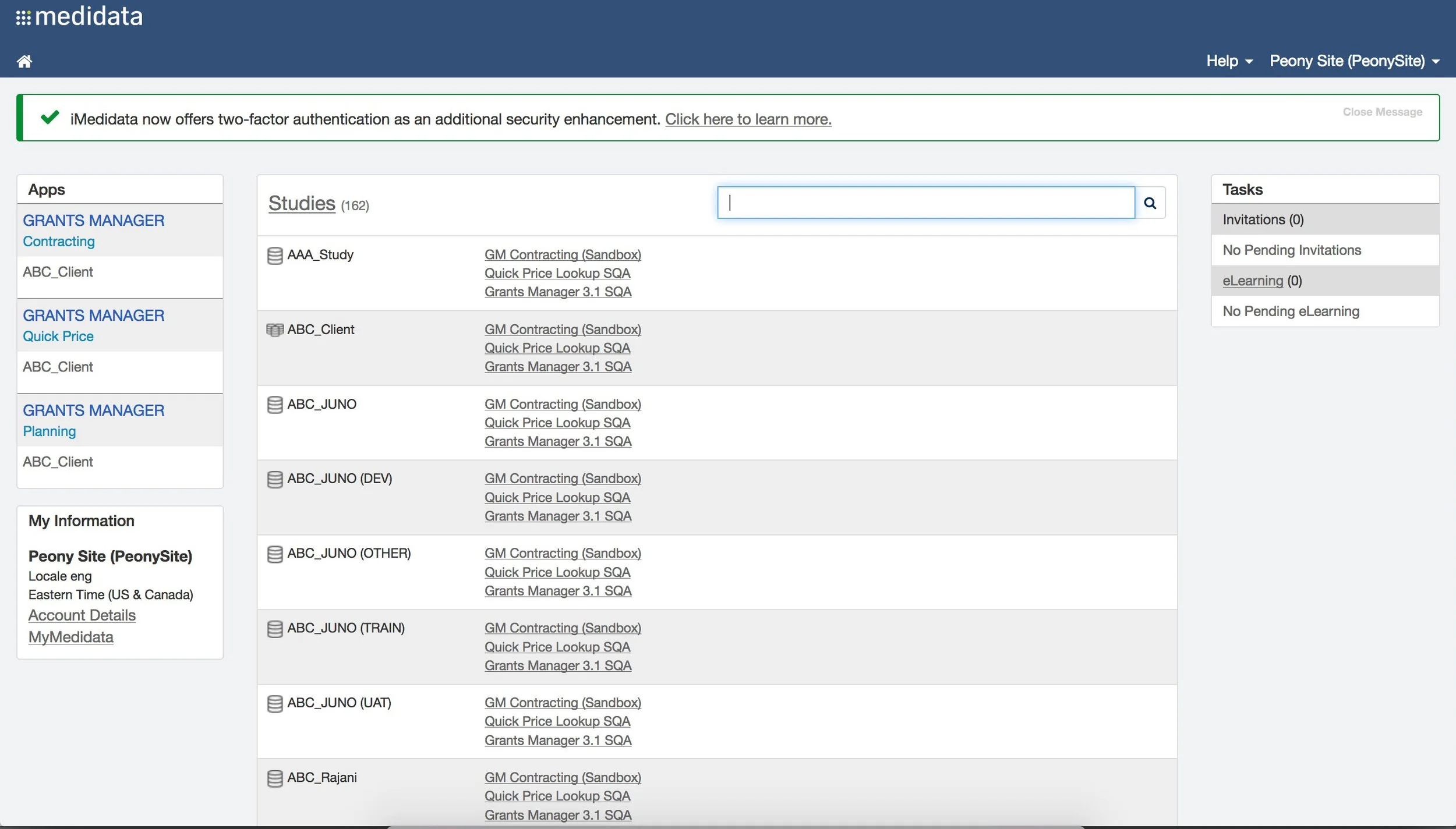
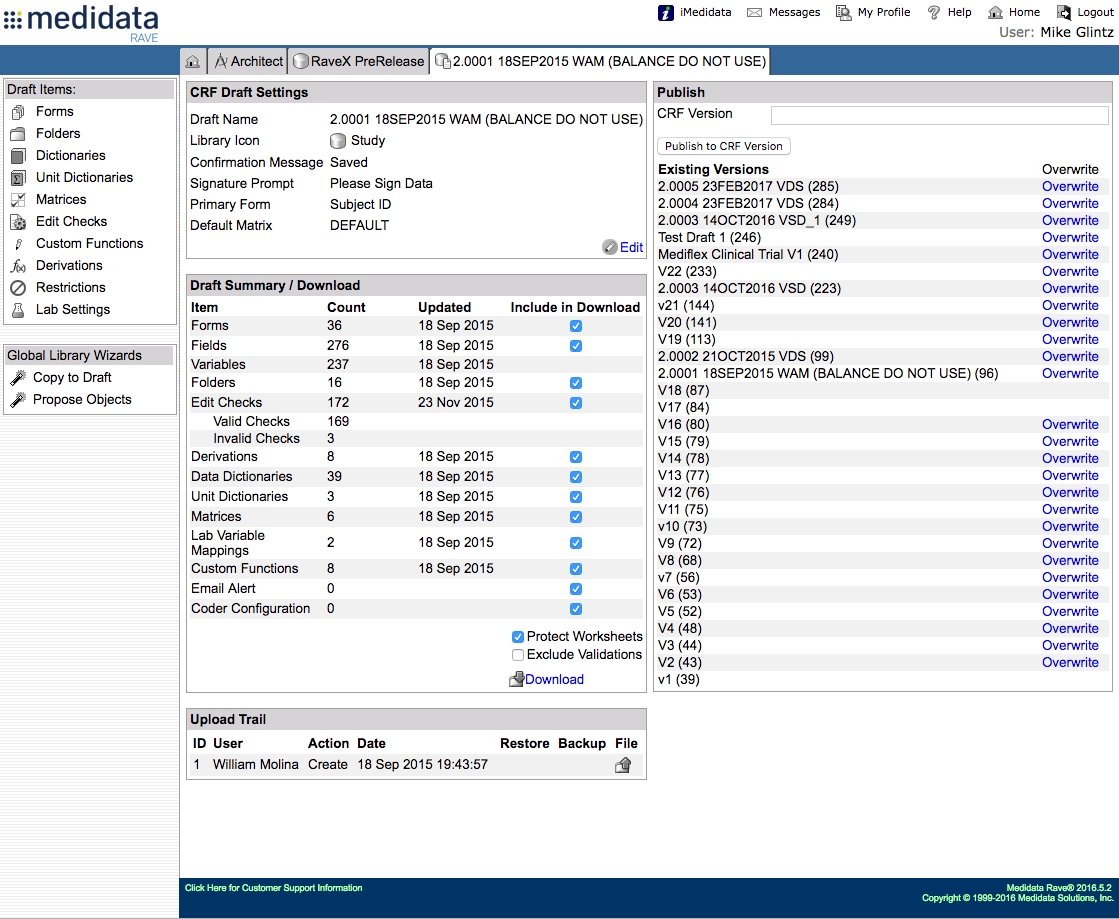
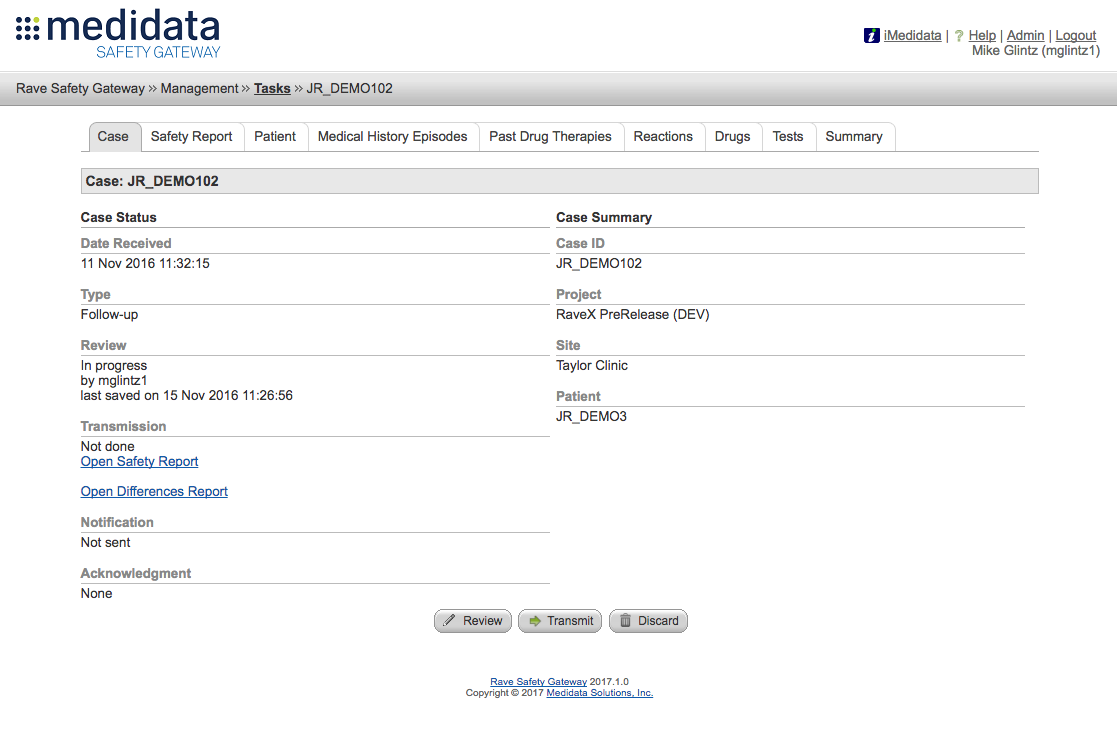
Medidata provides a suite of tools used by sponsors, sites, and patients to run clinical trials. As the platform grew, products were added quickly to meet new needs, but the experience became fragmented. Instead of one cohesive system, users encountered a patchwork of tools.
Key challenges included:
Interfaces, rules, and workflows that varied from product to product
Roles and permissions that did not persist across tools, creating repeated setup work
Disconnected workflows that forced users into workarounds
Valuable data that was captured but rarely surfaced in context
Product teams working in silos, each with its own roadmap and priorities
These gaps weakened usability, slowed trial setup, and limited the platform’s potential. My role was to connect insights across product teams and lead them through a structured ideation process that aligned priorities, clarified goals, and built a shared vision for a cohesive platform experience.
Discovery
Uncovering gaps in the user experience
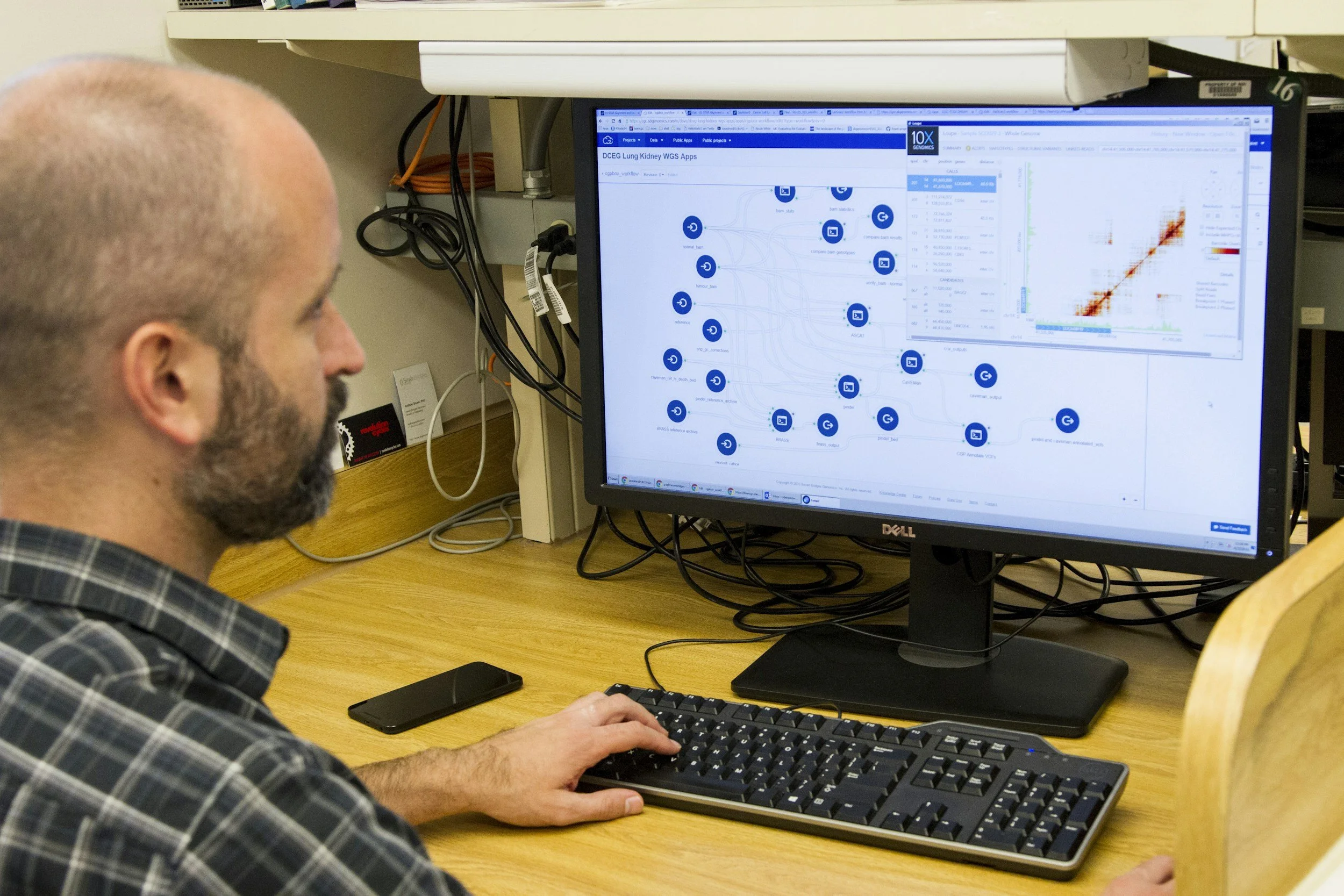
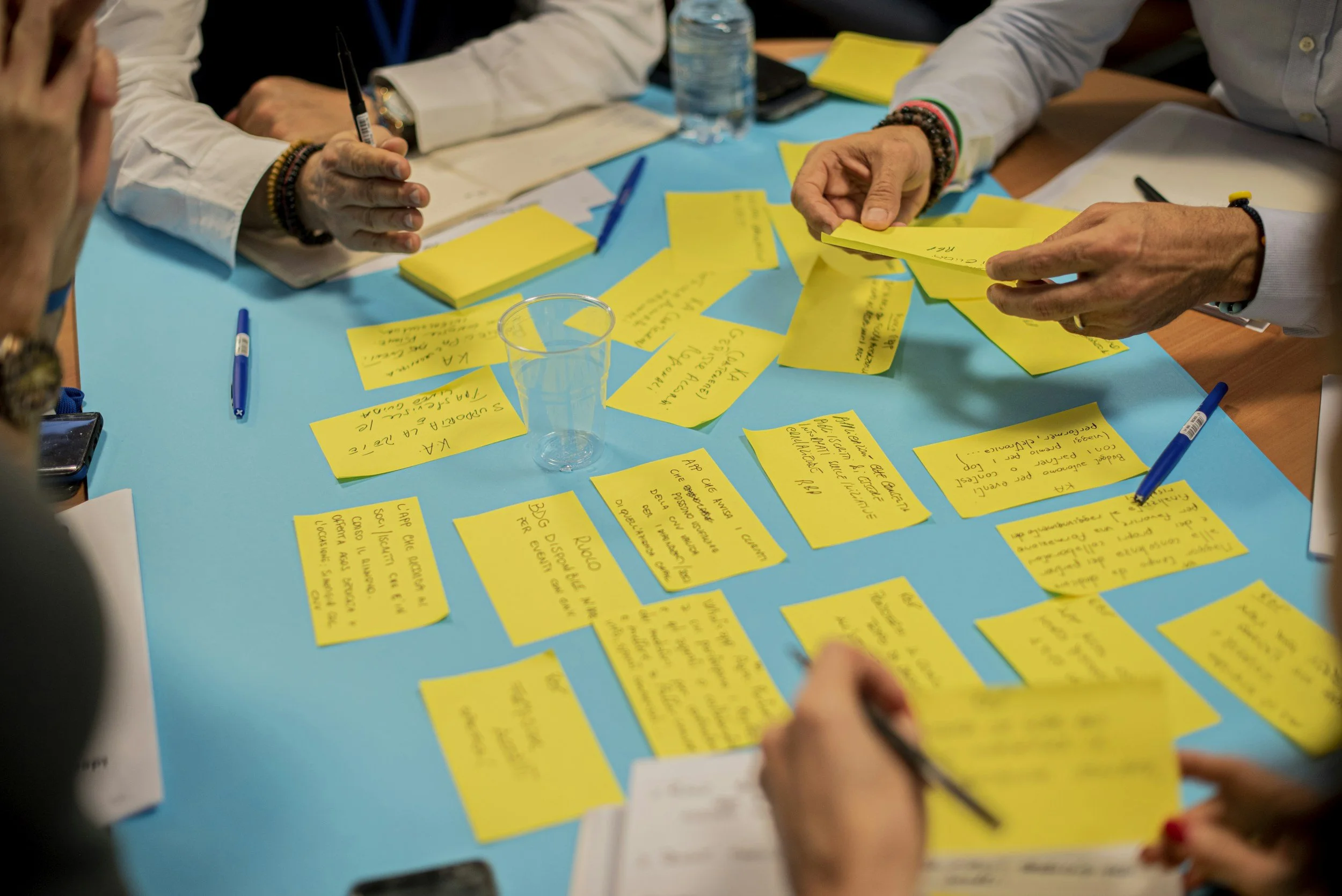
Facilitated cross-product workshops and SME interviews to identify friction points and overlaps
Audited entry points, role logic, and data visibility across tools
Aligned with product designers to gather existing research and identify gaps
Defined research strategies and timelines to connect findings to platform goals
Key insights
Users relied on workaround-heavy processes to connect tools
Roles did not persist across products, causing repeated setup steps
Fragmented visual design weakened usability and navigation
Valuable data was not surfaced in context or made actionable
These findings highlighted the need for shared workflows, persistent role logic, and a more unified platform structure.
Definition
Aligning Teams Around Shared Goals
Research from multiple product teams had to be distilled into into strategic tools for platform-wide alignment.I led the creation of Jobs-to-be-Done (JTBD) personas to shift focus from features to user goals. Drawing from SMEs and prior research, structured interview scripts helped capture motivations, barriers, and success criteria.
Each JTBD persona includes:
Job stories framing core objectives
Job maps outlining workflows step by step
Motivations, barriers, and success criteria
Functional, emotional, and social outcomes
To reinforce this, I also:
Worked with product teams to map UX flows across study phases to expose overlaps and gaps
Co-created platform UX principles, helping teams design with better context, clarity, and efficiency
Development
Designing for convergence
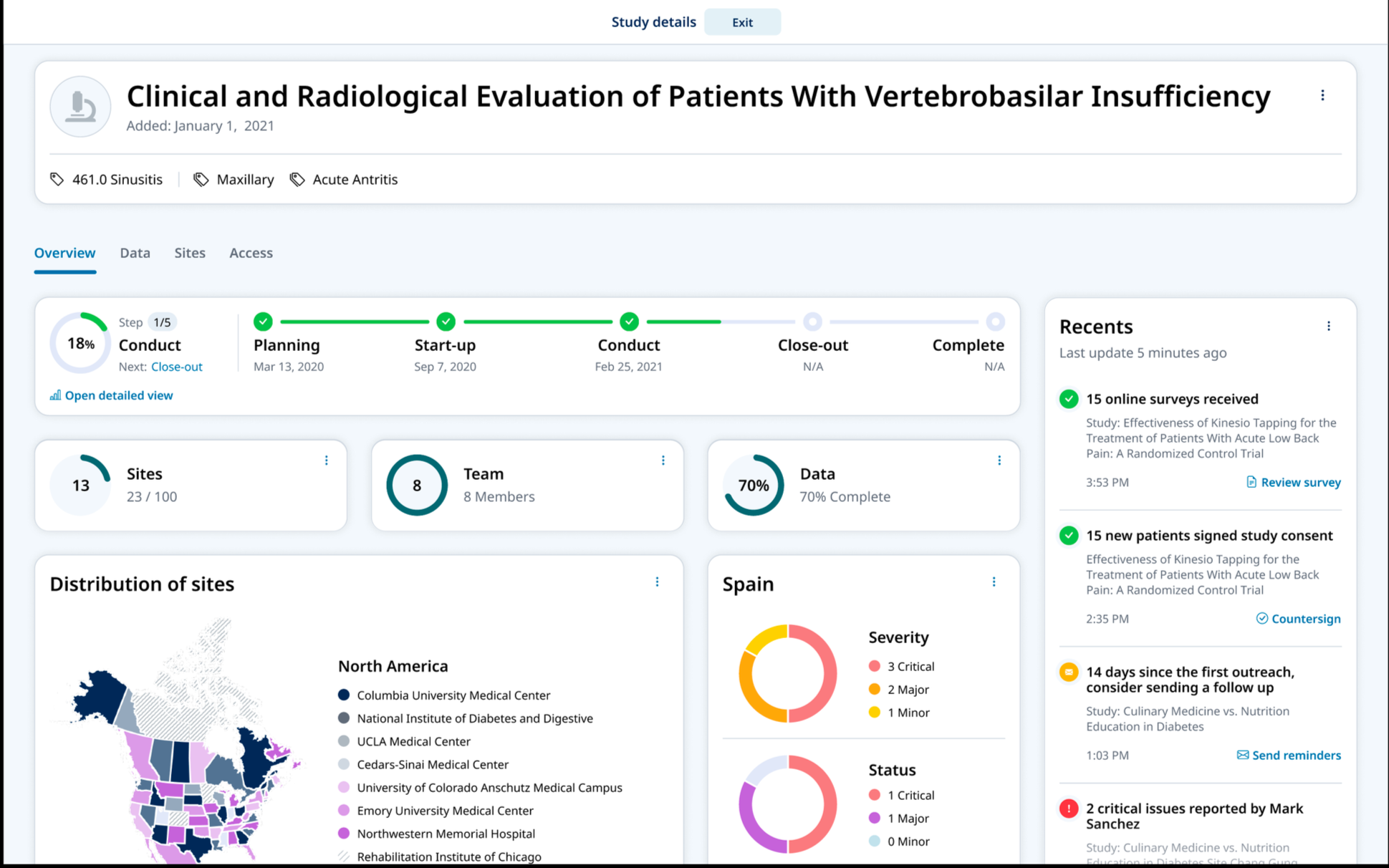
This phase focused on turning alignment tools into platform-wide solutions and creating scalable systems. I led the design of a role-based dashboard that brought critical data and workflows into one connected view, making the platform feel unified for the first time.
What I led:
Workshops with product teams to design a personalized homepage that adapted by user type and study context. The dashboard surfaced key metrics, alerts, and study insights in one place, reducing context switching and setup time.
Definition of consistent navigation patterns and design components across tools while allowing flexibility for specific needs
Coordination with engineering and analytics teams to identify underused but valuable data points to be surfaced in context.
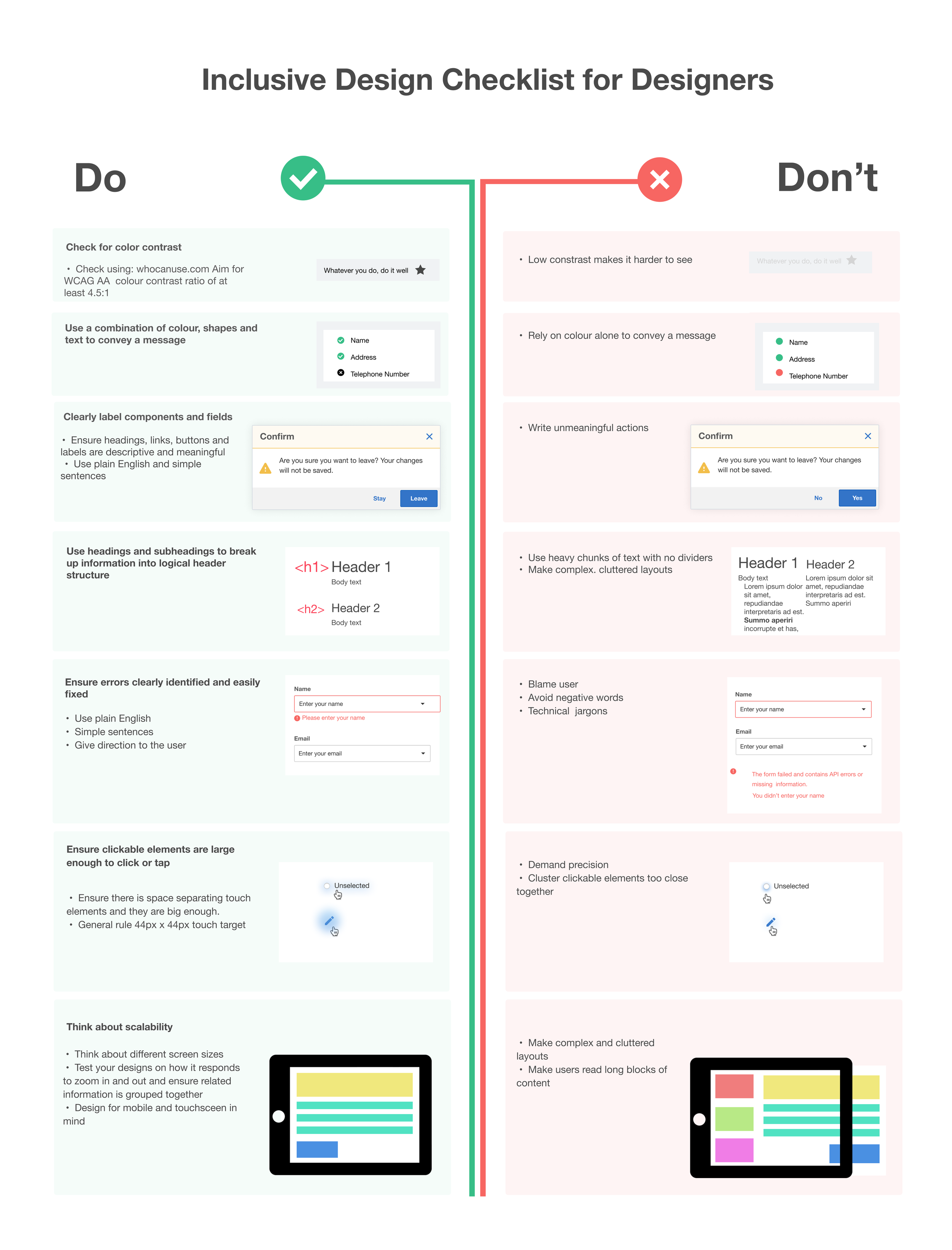
Consultation with the accessibility team to ensure compliance and usability across all tools.
Expansion of documentation with platform-level flows and reusable frameworks
To support execution:
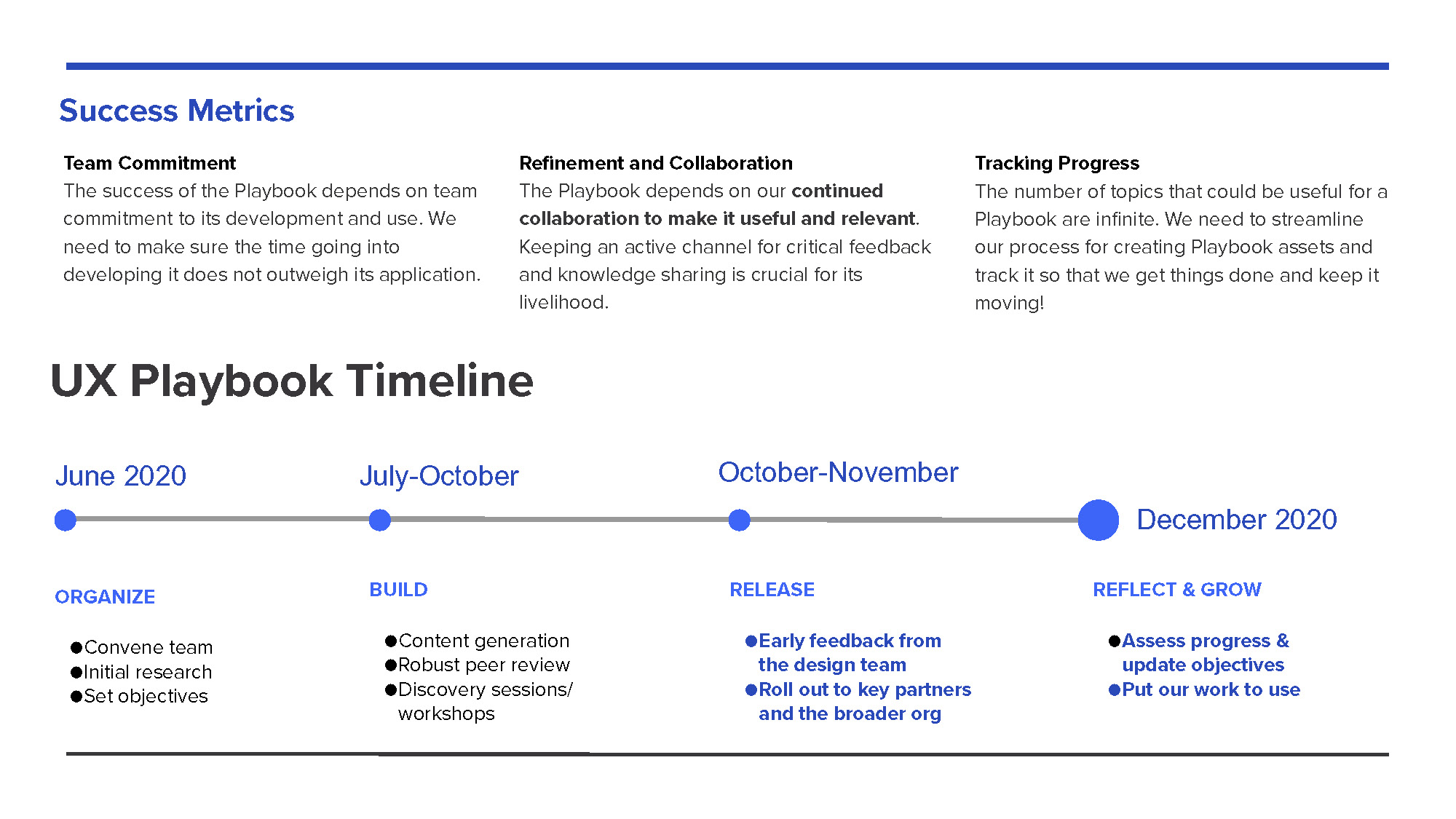
Directed the creation of the UX Playbook, translating team insights into practical methods, templates, and guides that streamlined daily work and reinforced alignment
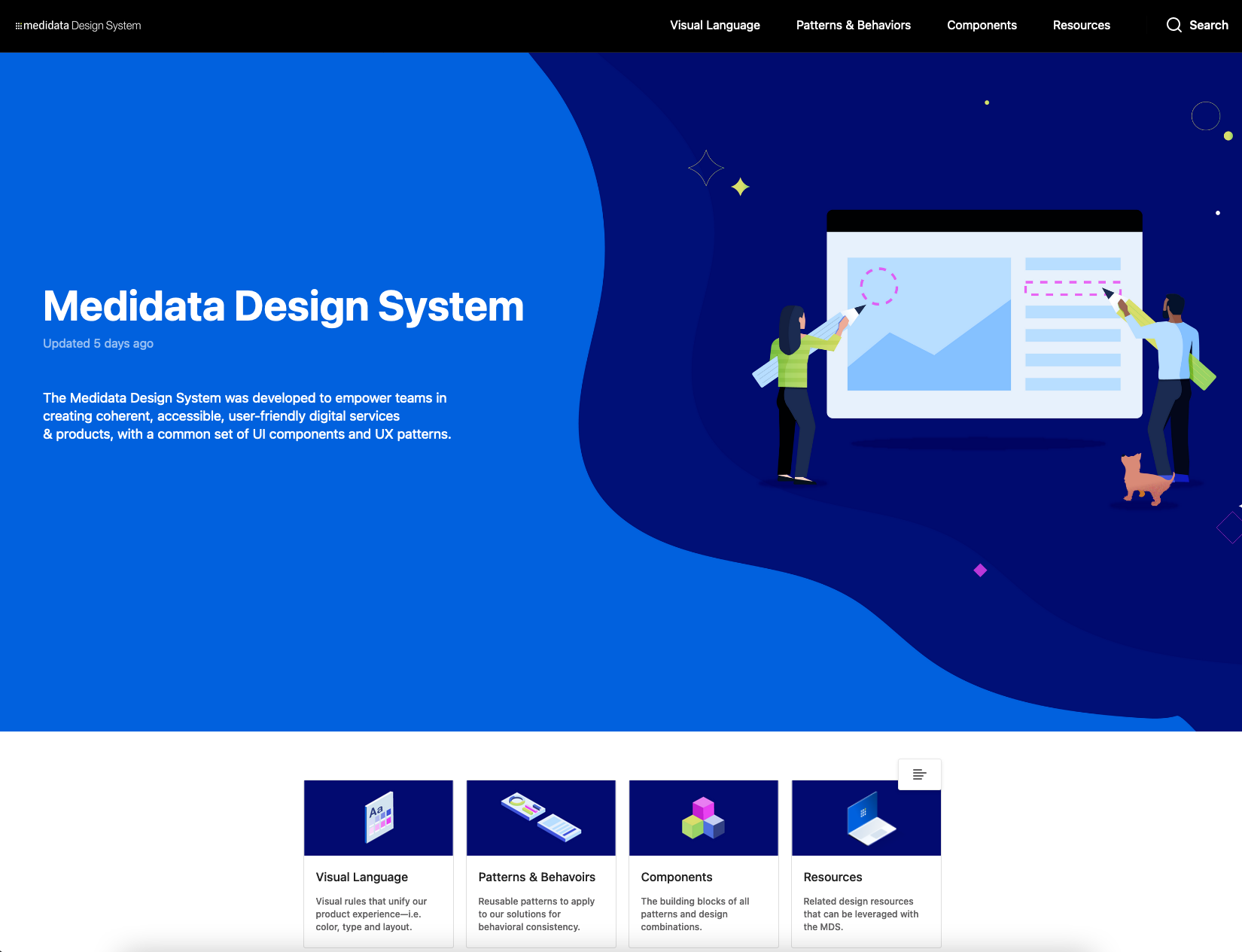
Partnered with the design system team to evolve components into platform patterns
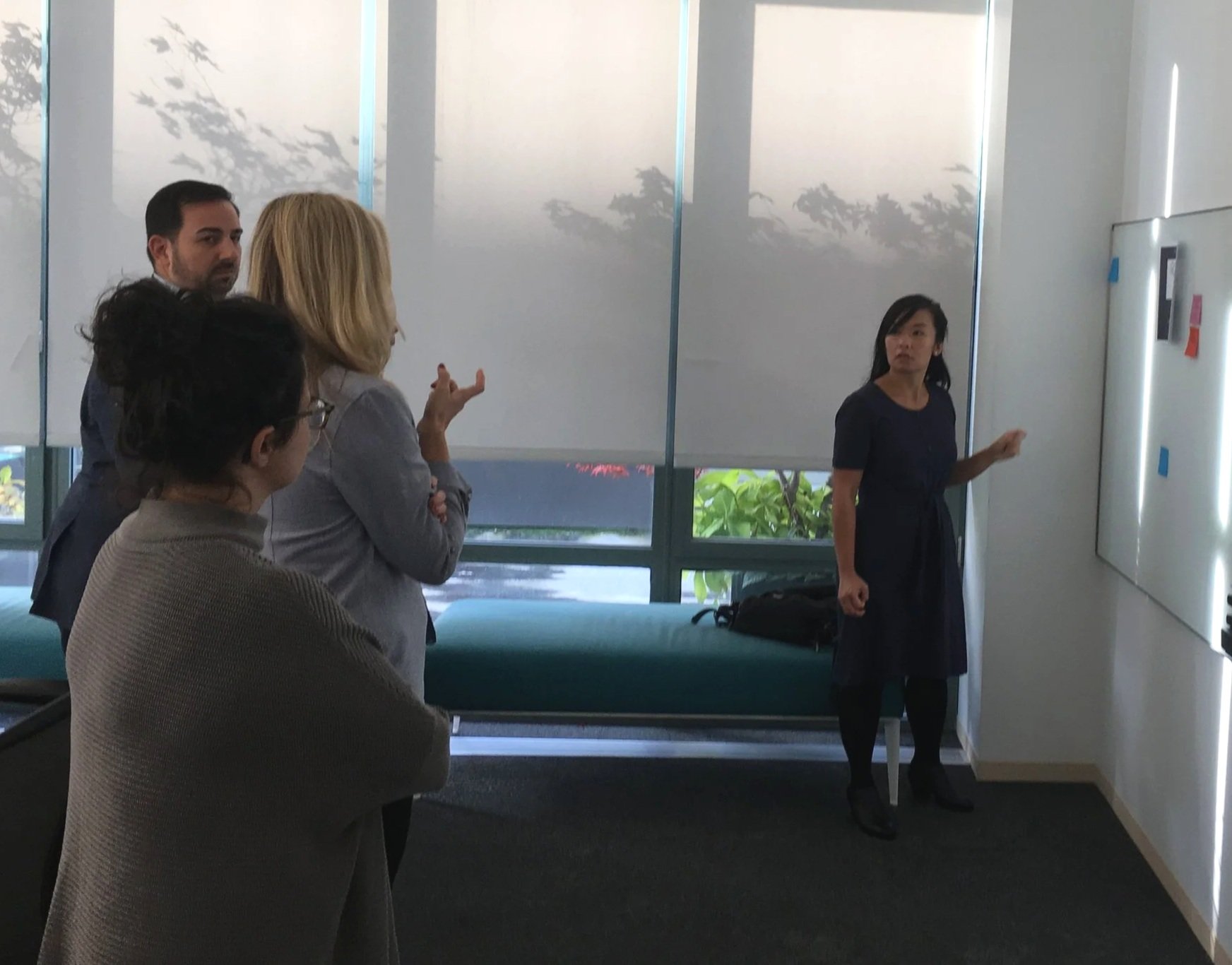
Facilitated ongoing design critiques and pattern reviews to validate new solutions, gather feedback, and embed platform thinking into everyday work.
Delivery
Scaling and Embedding the Vision
To ensure the unified experience was sustainable, I I focused on embedding alignment practices and shared systems into daily work.
Design system enhancements: Partnered with the accessibility team to refine components and patterns, ensuring consistency across the platform
UX Playbook rollout: Introduced a shared resource that translated strategy into daily practice, reinforcing a unified vision and stronger design culture
Cross-team critiques: Established recurring sessions for designers to share work, exchange feedback, and stay aligned, reducing siloed design.
Cross-functional forums: Hosted open sessions where non-designers could share ideas and proposals, building shared understanding and ownership of design direction.

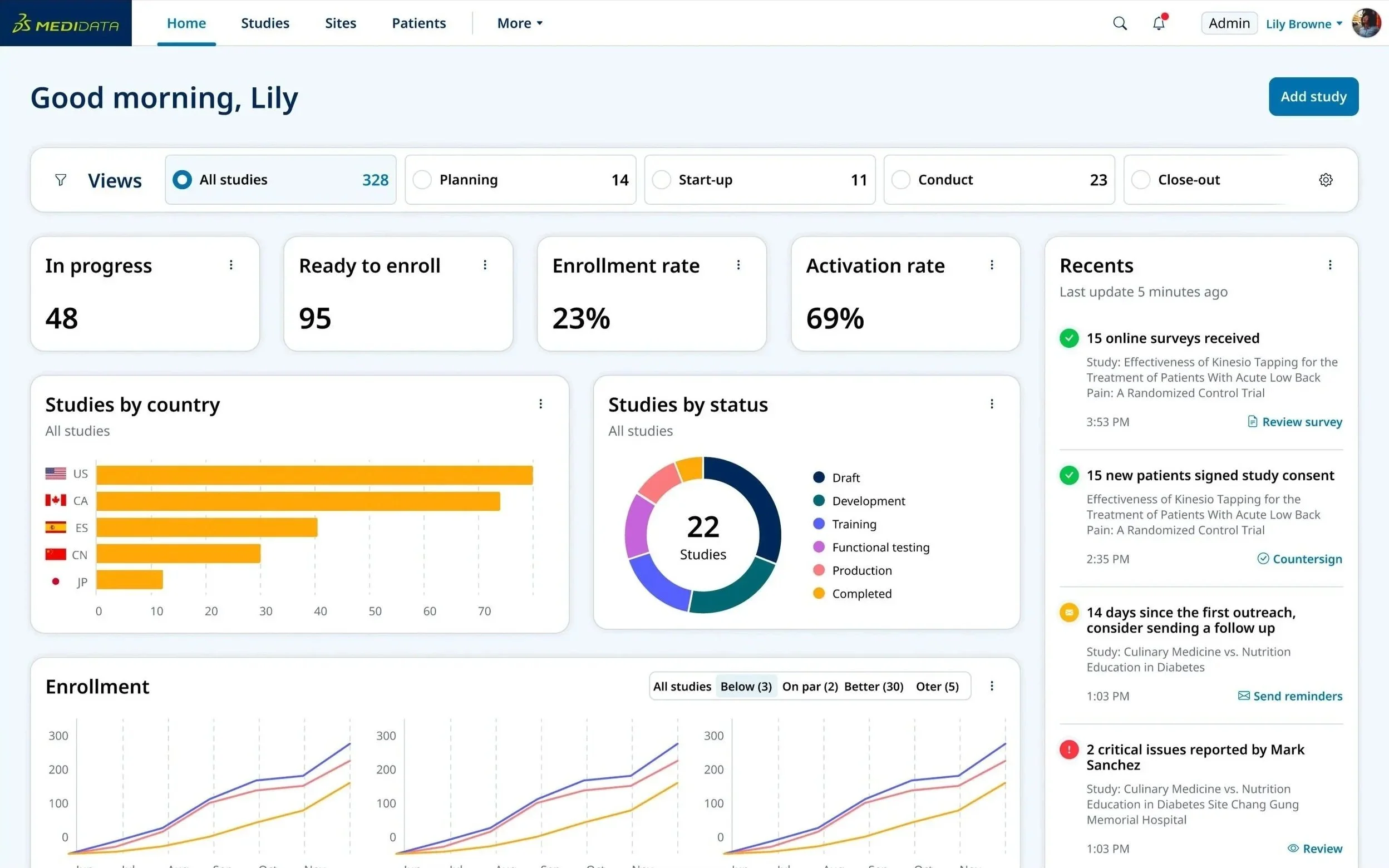
Entry Page Redesign
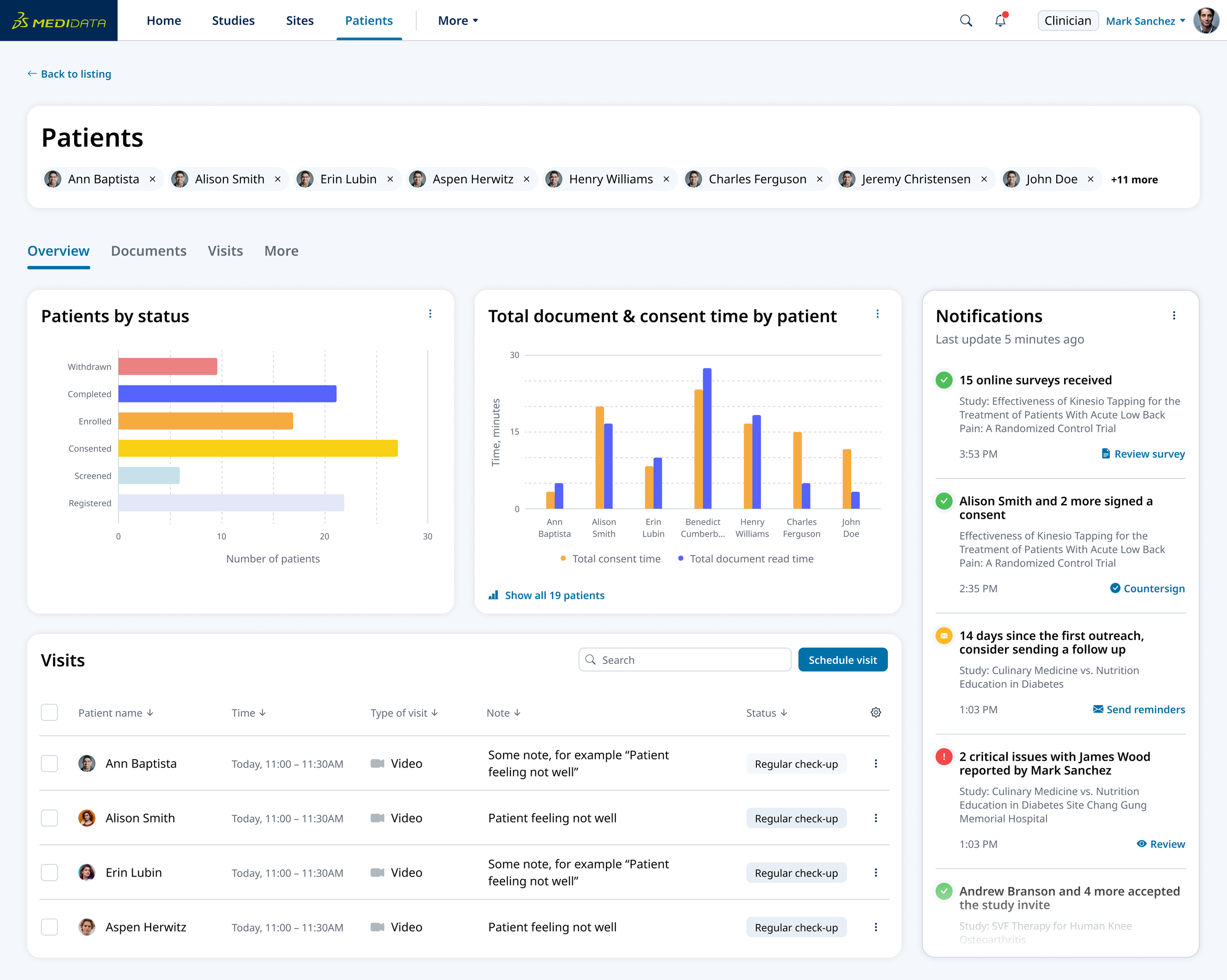
Patients Overview
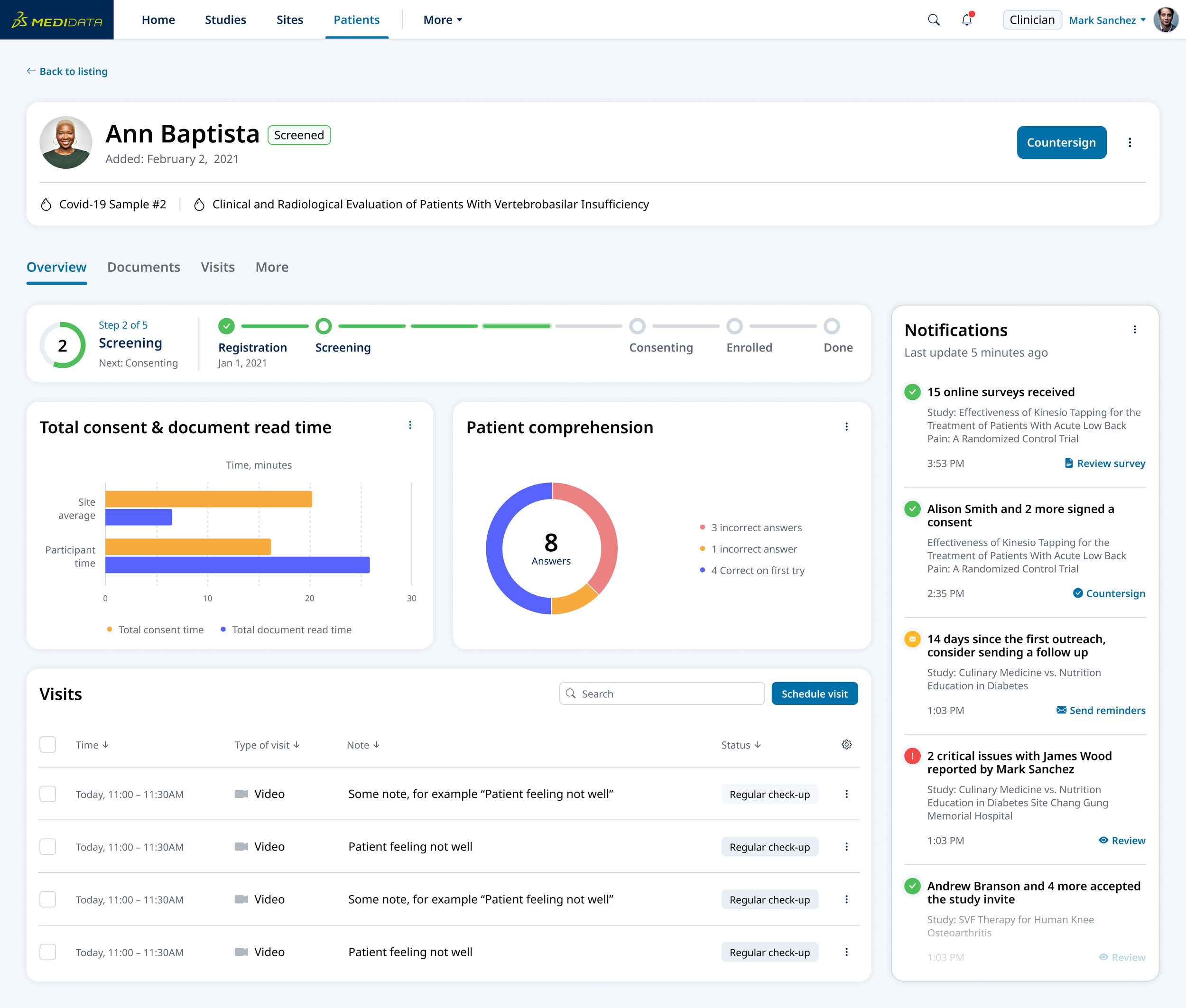
Patient Detail
Clinician View

Study Builder Detail
Activities View
Design Outcome
A Unified, Role-Based Dashboard Experience
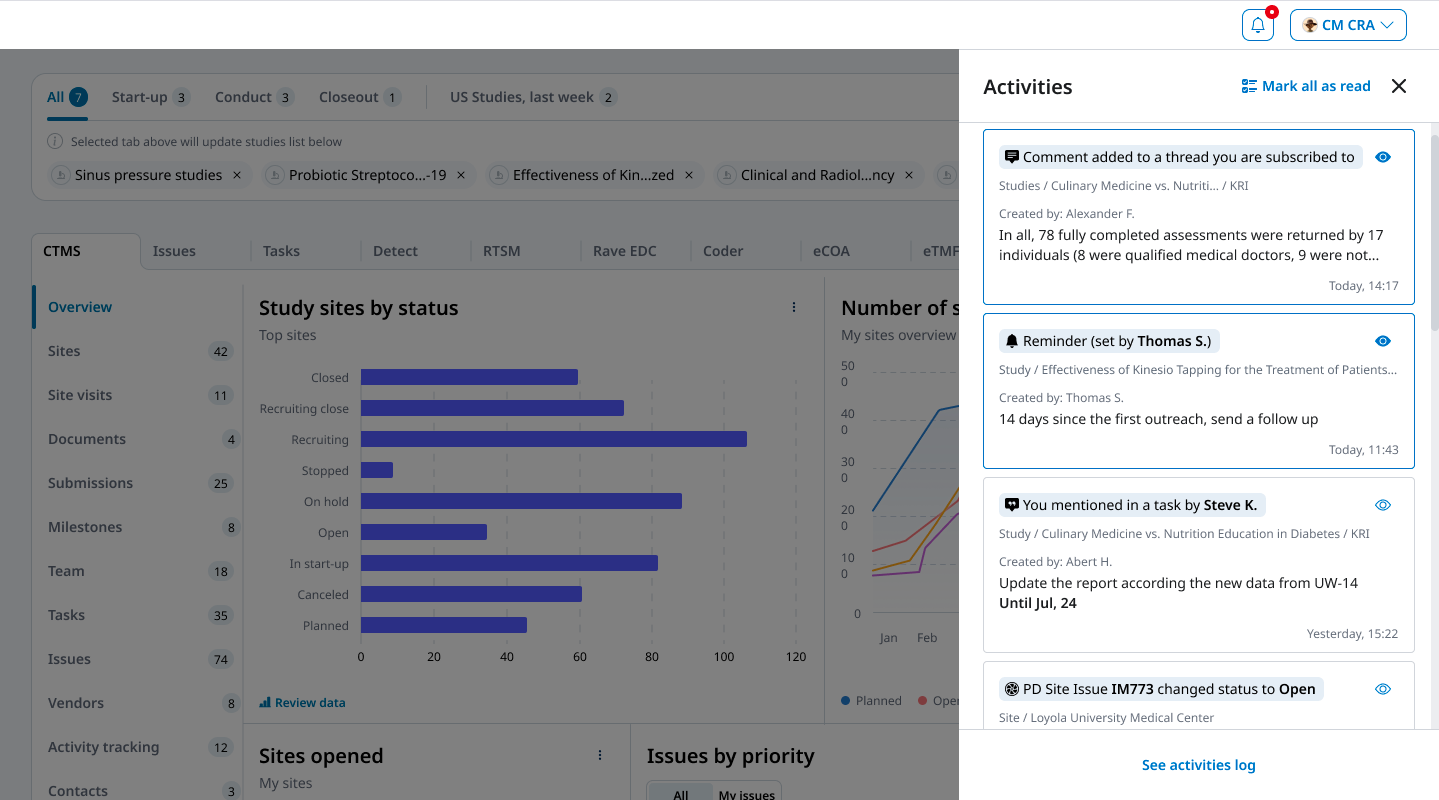
The initiative culminated in a unified, role-based dashboard that brought coherence and focus to the platform. The design consolidated tools and data into a single entry point where users could view key milestones and take action efficiently.
Major enhancements included:
Role-based dashboard: Personalized views tailored to user type and study context.
Unified navigation: Consistent patterns and labels across all products.
Data visibility: Key metrics and insights surfaced in context to support faster decisions.
Information hierarchy: Simplified layouts that improved readability and reduced cognitive load.
Design system integration: Reusable components and patterns applied consistently across teams.
Accessibility improvements: Enhanced color contrast, typography, and interaction states for compliance and ease of use.
Cross-tool workflow connections: Seamless transitions between related tasks without duplicate setup steps.
Impact
Turning Alignment into Scalable, Inclusive Design
This initiative delivered measurable improvements for users, the business, and internal teams.
For Users
Clearer navigation and consistent patterns
Role-based dashboards surfacing the most relevant data and actionable items
Streamlined workflows that reduced duplicate setup and manual work
For the Business
Faster study builds and more efficient trial execution
A scalable framework for integrating new products
Greater visibility into study data, improving insight and decision-making
For Internal Teams
A shared UX language through personas, flows, and platform principles
Stronger alignment across distributed teams
Sustainable collaboration through critiques, the UX Playbook, and design system governance